

Stuart Mayes - Following Eugène: A Spring Outing
In 1907, artist Eugène Jansson exhibited his figurative painting of a nude male body in Uppsala. The work marked a decisive shift in his artistic practice, bringing his circle of men – athletic and intimate – to the forefront. In Following Eugène: A Spring Outing, artist Stuart Mayes revisits this event, opening up reflections on how norms, identity and resistance are shaped, negotiated and transformed over time.
Exhibition period: 29 August–11 October
Opening: 29 August
Admission: Free
In the installation, Stuart Mayes takes as his starting point Eugène Jansson’s transition from atmospheric cityscapes to studies of the male body. Here, a historical episode in Uppsala becomes the starting point for a broader exploration of the gaze, desire and social norms.
Working with textiles, spatial arrangements, objects and archival material, Mayes invites visitors to move between fact and interpretation, documentation and speculation. Art history, local history and LGBTQI+ history are woven together to create a narrative in which the past is not something finished, but something that continues to shape the present.
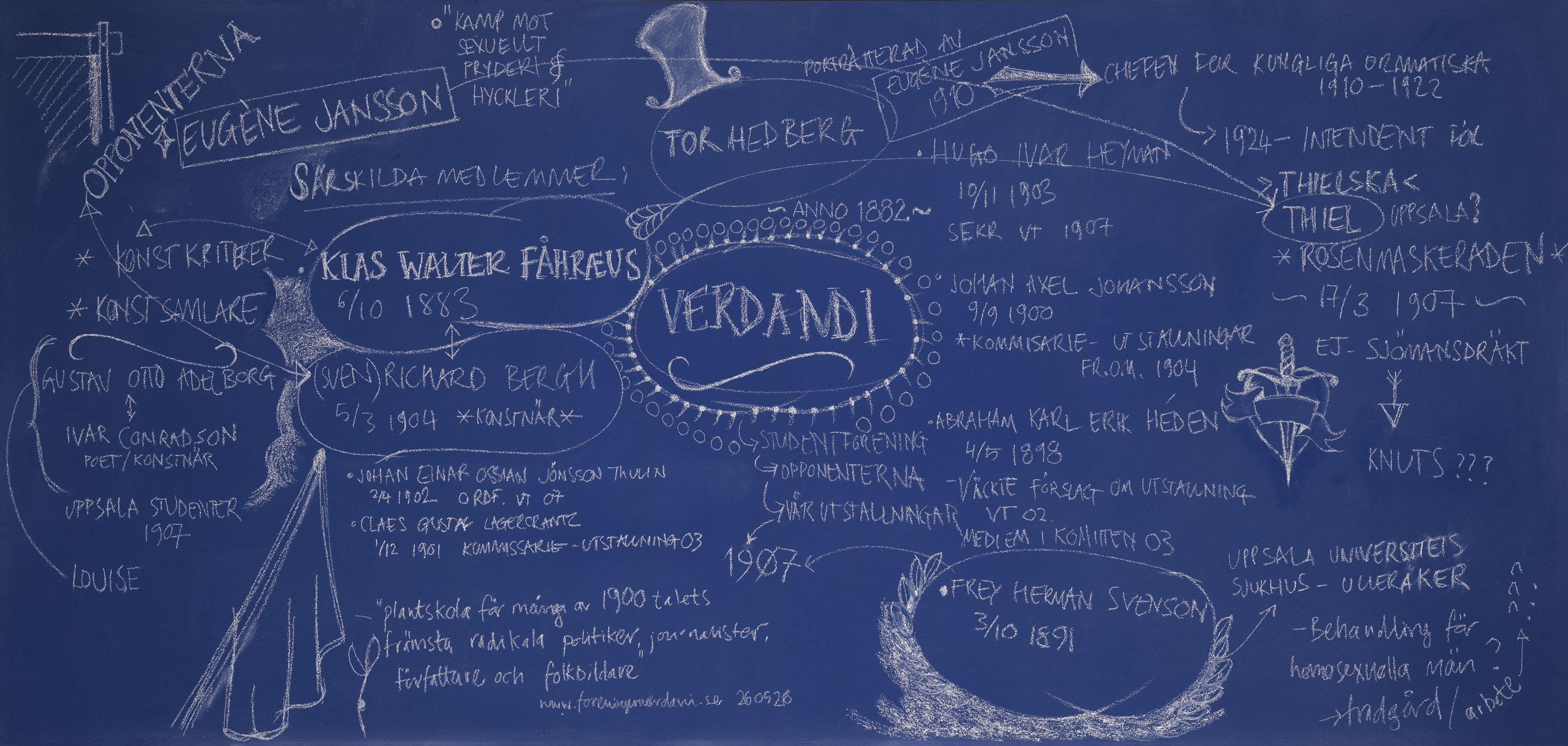
The starting point is the painting Naken yngling (Nude Youth) from 1906, which was exhibited in Uppsala the following year. It was the first time Eugène Jansson publicly presented his studies of nude male bodies. A seemingly insignificant note in an art historical publication from 1920 would much later raise the question of where these works were first exhibited. The traces lead back to a period marked by scandal and social renegotiation, when homosexuality shifted from being criminalised to being defined as a disease.
In Following Eugène: A Spring Outing, Stuart Mayes explores how Eugène Jansson’s images challenged contemporary ideas about the body, desire and masculinity. The installation shifts perspectives, presenting history as something fluid and continually changing – something that still shapes how we see ourselves and one another.
The exhibition is made possible with project funding from the Uppsala Cultural Affairs Committee.