

About the exhibition Queens
Queens is a story of power, dynasties and dramatic life choices in 16th-century Europe. Through the fates of two queens, the exhibition depicts how political alliances, marriages and personal relationships could shape entire kingdoms – and how the power struggles of the Renaissance still cast long shadows into our time.
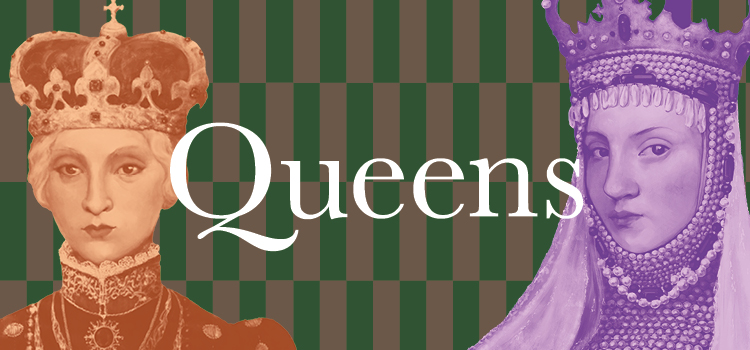
The exhibition starts with Catherine Jagiellon and Barbara Radziwiłł, two women who both left Vilnius to become queens in foreign kingdoms. Their lives unfolded in a Europe characterized by power struggles and political marriages between ruling families, where love, loyalty and personal beliefs could have decisive political consequences. The exhibition highlights both their public roles and their private experiences – things that have often been overshadowed through history.
The exhibition is produced by the National Museum of Lithuania – House of Histories and was shown in 2025–2026. It brought together, for the first time, a large number of original objects with a direct connection to the lives of the two queens, borrowed from museums in Lithuania, Poland, Hungary and Sweden. The exhibition raised great interest and established a new way of telling history through emotions, the body and human experience – side by side with political events.
Historical objects
In Queens you will encounter unique original historical objects from the 16th century, borrowed from museums in Lithuania, Poland, Sweden and Hungary. The objects provide a concrete insight into the rituals of court life, the symbols of power and the meaning of everyday life:
- Monumental history paintings with strong connections to the Radziwiłł and Jagiellonian dynasties.
- Royal insignia and symbols of power and legitimacy.
- Lavish and everyday objects from the Renaissance, including exclusive cutlery – including a fork – in Italian craftsmanship, decorated with precious stones and crystal.
- Objects that show how meals, clothing and ceremonies functioned as political arenas for representation and diplomacy.
Together, these objects show how power, the body and everyday life were closely intertwined in the world of queens.
Contemporary art
In the Swedish version of Queens, the exhibition has been expanded with contemporary art. Here, the historical objects meet contemporary artistic expressions that relate to the exhibition's themes without directly illustrating history.
Among the participating artists are Rita Jokiranta, Lovisa Ringborg and Charlotte Gyllenhammar, whose works move between video, photography and sculpture. Through motifs such as body, vulnerability, presence and power, their works open new entrances to the experiences of the queens – and to questions that are still present in our own lives.
Contemporary art acts as an extension of the narrative, creating a bridge between the past and the present. The contemporary art makes it possible to read history through the eyes of today and to understand how stories about women, power and emotions continue to be shaped and renegotiated.
A meeting between then and now, history and art, Uppsala Art Museum and Uppsala Castle History Museum
In Sweden, Queens is presented as a joint project between Uppsala Art Museum and Uppsala Castle History Museum. Here, art and history meet in dialogue, where the two museums' different perspectives and expertise create a whole that moves between the documented and the interpretive, between the material and the experiential.
The exhibition is shown in parallel in both museums, in environments where history is tangibly present. Together they create a place where stories of the past take on new resonance – and where the lives of the queens can be experienced both as history and as something that concerns us here and now.