

About Catherine Jagiellon
Catherine Jagiellon (Swedish: Katarina Jagellonica) is one of the most fascinating queens in Swedish history. Her life was marked by political conflicts, religious contradictions and personal trials – experiences that have had a great impact on how she is understood and portrayed in history.
Catherine grew up in Lithuania and Poland as a member of the powerful Jagiellonian dynasty. She was the daughter of the Polish King Sigismund I and Queen Bona Sforza, an Italian princess from Milan who brought with her Renaissance ideas about education, politics, and representation. Under her mother's influence, Catherine received an unusually solid education for her time, characterized by languages, diplomacy, and an international perspective.
Marriage to John III
When she married the Swedish Duke John (Swedish: Johan III) – the future John III – her life was linked to a new country and a new political context. The marriage was both strategically significant and personally close. For Catherine, moving to Sweden meant a life far from her origins, in a kingdom marked by religious and political tensions.
The marriage had dramatic consequences. Johan came into conflict with his brother, King Erik XIV, whose rule in later years was marked by increasing suspicion and violent power struggles. John and Catherine were imprisoned together and lived in isolation for several years. The imprisonment affected Catherine's health but also helped to shape her political judgment and deepen her religious convictions.
Queen of Sweden
When John later ascended the throne, Catherine became Queen of Sweden. She assumed a central role at court, acting as a cultural and political link between Sweden and continental Europe. At the same time, her position was vulnerable. As a Catholic and foreign queen in a Protestant kingdom, she constantly balanced loyalty, adaption, and resistance.
Catherine died in 1583, after several years of illness. Her life shows how the role of queen could contain both influence and vulnerability – and how personal beliefs could have far-reaching political consequences in a time of religious and political transformation.
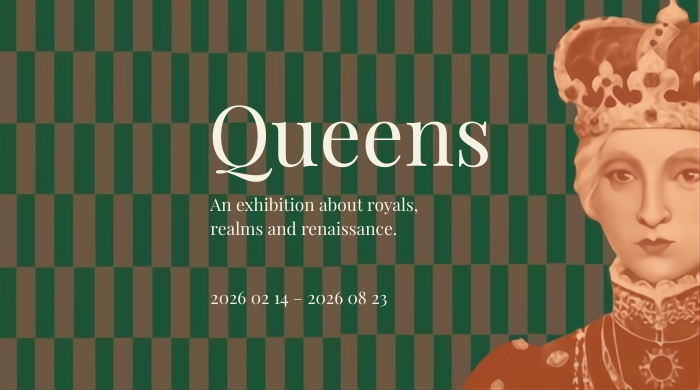
In Queens you will meet Catherine Jagiellonia through historical objects, documents and contemporary artistic interpretations. Her story is placed in relation to larger questions about dynasties, religion, migration and female agency in 16th century Europe. The fact that the exhibition is shown in Uppsala – close to the site of her coronation and tomb – gives her story a special proximity and topicality.